







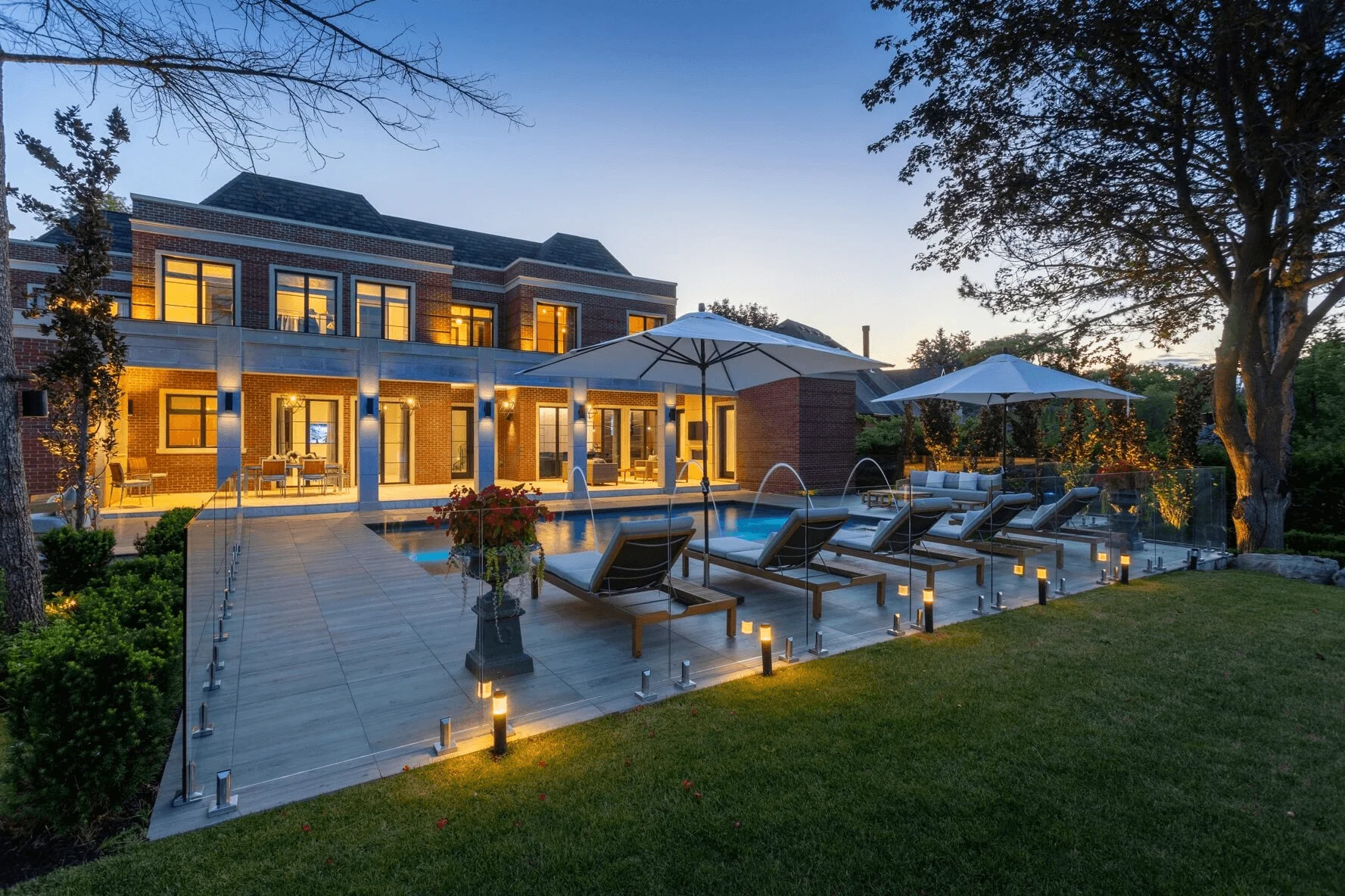
Quick Summary: Home renovation costs in Mississauga and Oakville range from $100–$500+ per square foot in 2026, depending on scope and finish. The average cost of a mid-range renovation on a 2,000 sq ft home typically lands between $300,000 and $500,000 CAD. Continue reading for room-by-room costs, ROI data, a real project case study, and what Mississauga and Oakville permit offices actually require.
Understanding the renovation cost for a home in Mississauga or Oakville takes more than a Google search. The home renovation cost in this part of the GTA is shaped by several factors unique to this market: the age of your housing stock, local permit timelines, material prices that have shifted sharply since 2023, and a labour market running short on qualified tradespeople. Whether you’re pricing a mid-range renovation or mapping out full gut renovations on a 1970s bungalow, the numbers here are grounded in real GTA project data, not national averages padded with filler.
We’ve renovated homes across Port Credit, Lorne Park, Clarkson, Kerr Village, Glen Abbey, and Oakville Shores. We know what post-war bungalows hide behind drywall, what Lorne Park buyers expect in finishes, and exactly how long Mississauga and Oakville permit offices take right now. If you’re trying to set a realistic budget for your home renovation in 2026, this is the guide built for that conversation.
What Home Renovation Actually Costs in Mississauga & Oakville Right Now
The average cost of home renovation in this part of the GTA sits between $150 and $350 per square foot for most mid-to-full scope projects in 2026. A full home renovation of a typical 2,000 sq ft detached home lands between $300,000 and $700,000 — with the spread driven almost entirely by what you find once walls come down, not just what you planned upfront.
These ranges vary significantly depending on the age of your home, neighbourhood, and what your contractor discovers during the early demolition phase. A 1980s Clarkson two-storey carries very different renovation costs than a 2005 Glen Abbey home of the same square footage.
2026 Renovation Cost by Scope — Mississauga & Oakville
Renovation Level | Cost Per Sq Ft | 2,000 Sq Ft Total | Typical Scope |
|---|---|---|---|
Cosmetic Refresh | $100–$150 | $200K–$300K | Paint, flooring, fixtures, minor updates |
Mid-Range Renovation | $175–$250 | $350K–$500K | Kitchen, bathrooms, basement, systems |
Full Gut Renovation | $275–$350 | $550K–$700K | Complete gut, structural changes, custom finishes |
High-End / Luxury | $350–$500+ | $700K–$1M+ | Premium materials, custom millwork, full rebuild |
Oakville premium: Homes in Old Oakville, Bronte, and Joshua Creek typically run 10–20% above equivalent Mississauga projects. Higher finish expectations, trade pricing in the west GTA, and design complexity in older neighbourhoods all influence pricing in that market.
A mid-range renovation covers the rooms and systems that matter most to buyers — kitchen, bathrooms, and key living areas — without touching everything. Full gut renovations strip a home to its studs and rebuild from scratch; they cost significantly more and take longer, but they eliminate every hidden risk at once. The full home renovation cost is not just a number you pick — it’s built from the total cost of each room, each trade, permits, design, and a contingency buffer. The sections below break that down properly.
Room-by-Room Renovation Cost Breakdown
The average cost of your renovation is the sum of individual rooms — not a single number applied to the whole home. Each space has its own cost range, driven by finishes, plumbing, and structural requirements. Here’s what each room realistically costs in the 2026 Mississauga and Oakville market.
Kitchen Renovation Costs
The average cost of a kitchen renovation in Mississauga and Oakville ranges from $35,000 for a mid-range update to $150,000+ for a fully custom build. Kitchen remodels are the most visible investment in any home and consistently drive the most buyer attention at resale. Key factors that influence pricing include custom cabinets versus stock cabinetry, countertop material, appliance grade, and whether any structural changes to the floor plan are required. Material costs for cabinetry, countertops, and tile typically represent 40–55% of total kitchen renovation costs.
Kitchen Renovation Cost — Mississauga & Oakville 2026
Tier | Cost Range | What’s Included |
|---|---|---|
Budget | $25,000–$40,000 | Stock cabinets, laminate counters, basic appliances |
Mid-Range | $45,000–$80,000 | Semi-custom cabinets, quartz counters, mid-grade appliances |
High-End | $85,000–$150,000+ | Custom cabinetry, stone surfaces, luxury appliances, full structural changes |
Bathroom Renovations
The average cost for bathroom renovations ranges from $14,000 for a powder room refresh to $65,000+ for a primary ensuite with heated floors, luxury fixtures, and custom cabinets. Older homes in Kerr Village, Clarkson, and south Mississauga often have cast iron tubs and original tile that require full demolition, which pushes both labor costs and disposal fees higher than homeowners expect. Design complexity matters: a straightforward tile swap costs far less than reconfiguring the layout.
Bathroom Renovation Costs — 2026
Type | Cost Range | Notes |
|---|---|---|
Powder Room | $12,000–$20,000 | Vanity, toilet, tile, fixtures |
Main Bath (mid-range) | $22,000–$40,000 | New tub/shower, tile, vanity, lighting |
Primary Ensuite | $40,000–$65,000+ | Walk-in shower, heated floors, custom cabinets, luxury fixtures |
Basement Finishing
A finished basement adds real usable space to your home and remains one of the highest-demand renovation types in both Mississauga and Oakville. The cost jumps sharply when you convert a basic rec room into a legal secondary suite — because a rental unit requires a separate entrance, fire separation, and its own mechanical systems, all governed by local building codes.
Basement Renovation Cost — Mississauga & Oakville 2026
Type | Cost Range | Notes |
|---|---|---|
Basic Rec Room | $45,000–$65,000 | Drywall, flooring, pot lights, basic bar |
Mid-Range Living Space | $65,000–$95,000 | Full living space, bathroom, egress window |
Legal Secondary Suite | $90,000–$130,000 | Separate entrance, fire separation, full kitchen, permits |
Which Renovations Deliver the Best Return in This Market
The home renovation cost you spend today should be weighed against what it returns at resale — or through rental income. Not all renovation dollars return the same value. In Mississauga and Oakville — where property value is high and buyers are selective — knowing where to invest is as important as knowing what things cost. This table gives you an honest look at ROI by renovation type in the current GTA market. Use it to make informed decisions before committing your renovation budget.
2026 ROI by Renovation Type — Mississauga & Oakville
Renovation Type | Typical Cost | Estimated ROI | Added Property Value | Timeline |
|---|---|---|---|---|
Mid-Range Kitchen | $45K–$80K | 65–80% | $30K–$60K | 6–12 weeks |
Bathroom Renovations | $22K–$50K | 55–70% | $15K–$35K | 3–6 weeks |
Basement (Living Space) | $65K–$95K | 60–75% | $45K–$70K | 8–14 weeks |
Legal Basement Suite | $90K–$130K | 75–90%* | Resale + rental income | 10–16 weeks |
Open-Concept Main Floor | $35K–$75K | 55–70% | $25K–$50K | 5–8 weeks |
Curb Appeal + Exterior | $20K–$45K | 50–65% | $12K–$28K | 2–5 weeks |
*Legal basement suite ROI accounts for both resale bump and ongoing rental income. At $1,800–$2,400/month in Mississauga, a $110,000 basement project can pay for itself in under five years before touching resale.
The “move vs. renovate” math: A $400,000 renovation on a home you own outright competes directly with $80,000 in land transfer tax, agent fees, and moving costs on a $1.8M move-up home. For many Mississauga and Oakville homeowners in 2026, renovating the existing house wins on paper.
Why Renovation Costs Run Higher Than the Estimate
The gap between your initial quote and your final cost is not a mystery. It comes from several key factors that are specific to GTA housing stock and the current construction market — and every homeowner planning a full home renovation should understand them before signing anything.
1. Skilled Trades Are in Short Supply
Skilled trades shortages are not a talking point — they’re a real constraint on every project timeline and cost structure in the GTA right now. According to BuildForce Canada’s 2024 Construction and Maintenance Looking Forward report, the industry faces a projected shortfall of 61,400 workers by 2032, with roughly 20% of the current workforce retiring within the decade. Rising demand for renovation work only tightens availability further.
2. Older Homes Carry Hidden Complexity
A significant share of housing stock in south Mississauga and older Oakville — Cooksville, Port Credit, Kerr Village, Clarkson — was built between the 1940s and 1980s. That era of construction means outdated wiring (knob-and-tube or undersized panels), cast iron drains, galvanized supply lines, and in many cases, asbestos-containing materials in floor adhesive or ceiling texture. Once construction begins and walls open up, costs involved in addressing these issues are unavoidable and non-negotiable — they must be remediated before work can continue.
3. Permit Timelines in Mississauga and Oakville Are Real
Building permits are required for nearly every meaningful scope of renovation work in both cities. The City of Mississauga’s ePlans portal processes residential permits based on project floor area, with permit fees calculated per square metre. The Town of Oakville Building Permits office requires permits for any work affecting structure, plumbing, electrical systems, or finished basement space. Simple residential approvals take 4–8 weeks in Mississauga and 3–6 weeks in Oakville — before a single tool is picked up.
4. Material Prices Have Shifted
Material costs and material prices have continued to climb through 2025 and into 2026, driven by supply chain pressures and tariff impacts on imported goods. Engineered hardwood, quartz countertops, and imported tile are all running 10–15% higher than 2023 baseline pricing. Premium materials at the high end of the market have seen even sharper increases.
Hidden Costs That Catch Homeowners Off Guard
Hidden costs are not the exception on older GTA homes — they’re standard. Budget for them from day one or face cost overruns mid-project.
Electrical Upgrades
Homes built before 1990 commonly have 60-amp panels that need upgrading to 200-amp service before a kitchen or basement renovation can proceed. Electrical upgrades in this range run $8,000–$18,000 depending on the scope. Outdated wiring that fails inspection gets flagged and can’t be covered up — it must be replaced, which adds to both labor costs and project duration. This is one of the most consistent unexpected expenses we encounter in South Mississauga homes.
Plumbing Discoveries
Galvanized supply lines deteriorate from the inside and often look fine until they’re opened. Cast iron drains crack, corrode, and fail. Plumbing permits are required for any new drain or supply work, and plumbing repairs discovered mid-project can’t be deferred. Budget $8,000–$20,000 for plumbing remediation if your home predates 1985. Unexpected costs here are among the most common reasons renovation budgets expand past the original scope.
Structural Findings
Removing a wall in an older home can reveal load-bearing conditions not visible on any plan. When structural changes require engineering review, add $3,000–$8,000 for the assessment, drawings, and any remedial beam work. This is non-negotiable from a permit and safety standpoint — no reputable general contractor skips it.
Asbestos and Mold Remediation
Pre-1980 homes frequently test positive for asbestos in floor tile adhesive, ceiling texture, or insulation wrap. Professional remediation is mandatory, adds $5,000–$20,000 to unexpected expenses, and delays construction schedules by 2–4 weeks. Mold behind shower surrounds or in basement rim joists carries similar cost and timeline impacts.
The 15–20% contingency rule: On a $300,000 renovation budget, set aside $45,000–$60,000 for what you can’t see yet. Homeowners who skip this step consistently face cost overruns at the worst possible moment — mid-project, when stopping costs more than continuing.
Mississauga vs. Oakville: The Local Breakdown
These two markets share a border but don’t behave the same. Here’s how renovation cost varies between them.
Mississauga vs. Oakville — 2026 Renovation Comparison
Factor | Mississauga | Oakville |
|---|---|---|
Mid-Range Renovation Cost (per square foot) | $175–$250/sq ft | $200–$275/sq ft |
High-End Reno (per square foot) | $280–$380/sq ft | $320–$450+/sq ft |
Permit Office | City of Mississauga ePlans | Town of Oakville Building Dept. |
Common Housing Stock | Post-war bungalows, 80s subdivisions, luxury estates | Wartime bungalows, heritage homes, newer executive builds |
Key Renovation Hotspots | Port Credit, Lorne Park, Clarkson, Mineola, Erin Mills | Kerr Village, Old Oakville, Bronte, Glen Abbey, Joshua Creek |
Finish Expectations | Wide range — market-tier to luxury | Lean toward premium; buyers expect higher baseline |
Avg. Permit Timeline | 4–8 weeks residential | 3–6 weeks residential |
Oakville’s renovation market leans higher across the board. A mid range renovation in Kerr Village or Glen Abbey runs $200–$275 per square foot depending on the home’s age and condition. High end renovations in Old Oakville and Joshua Creek regularly exceed $400 per square foot — buyers in those markets expect premium finishes as a baseline, not an upgrade. Luxury materials like imported stone, custom features in millwork and built-ins, and bespoke tile work increase costs by 30–50% over standard scopes.
The average home renovation cost in Mississauga ranges from $150 to $320 per square foot, depending on neighbourhood and scope. In Mississauga, square footage and neighbourhood determine more of the renovation cost picture than in Oakville, where the baseline finish level is higher across the board. A mid-range renovation in Lorne Park looks different from one in Malton — and a general contractor who doesn’t understand that distinction will misprice your project from the start.
How a Home Renovation Actually Moves From Idea to Completion
Understanding the construction schedule prevents most of the frustration homeowners experience. Here’s how a typical renovation journey progresses when managed by an experienced general contractor:
Stage | What Happens | Typical Duration |
|---|---|---|
1. Consultation & Scope | Walk the property, define project scope, preliminary pricing | 1–2 weeks |
2. Design & Drawings | Working drawings produced for permits and trade coordination | 2–4 weeks |
3. Permit Submission | Municipal permits submitted; permit fees paid; inspections scheduled | 4–8 weeks (Mississauga) / 3–6 weeks (Oakville) |
4. Construction | Demolition, rough-ins, trades, finishes — managed by your general contractor | 6–18 weeks depending on scope |
5. Inspections & Sign-Off | Municipal inspections at each required stage | Ongoing through construction |
6. Final Walkthrough | Client review, deficiency list, sign-off | 1 week |
For a full gut renovation or large multi-room project, total calendar time from first call to final walkthrough typically runs 6–9 months. This is not a reason to delay — it’s a reason to start the conversation now. Experienced professionals who deliver quality workmanship book out quickly in this market.
Ontario Rebates That Reduce Your Total Budget
Before you finalize your project budget, check what provincial and federal rebates apply. Energy efficiency improvements in particular carry real financial support in 2026.
Canada Greener Homes Grant: Up to $5,600 for eligible energy efficient upgrades — insulation, heat pumps, windows. Requires a pre- and post-retrofit EnerGuide evaluation.
Enbridge Home Efficiency Rebate Plus: Rebates for insulation, smart thermostats, and high-efficiency heating systems. Available to Enbridge gas customers in Ontario.
Home Accessibility Tax Credit (HATC): Up to $3,000 in federal tax relief for accessibility modifications — ramp installations, grab bars, widened doorways.
HST New Residential Rental Property Rebate: If you’re building a new secondary suite in your home, you may qualify for an HST rebate on construction costs. Worth reviewing with your accountant before construction begins.
These rebates don’t transform your total cost, but they reward informed decisions made at the design stage — and they make energy-efficient upgrades more viable as part of a larger project scope.
How to Keep Renovation Budget Under Control
The best way to control costs is to make decisions early. Choose material choices before pricing, confirm allowances, approve drawings, and avoid changing the plan after construction begins. A realistic budget should include contingency, tax, design work, permit fees, temporary accommodations if needed, and a reserve for unexpected expenses.
To save money without weakening the result, keep plumbing in the same location, preserve structure where possible, phase non-essential work, and spend where it affects daily use. A good general contractor can also help compare alternates before they increase costs. The renovation stays healthier when the team solves problems on paper instead of on site.
A Homeowner Planning Checklist
Use the planning stage to make informed decisions and avoid costly mistakes.
Define rooms, goals, quality level, and must-have outcomes before pricing.
Confirm structural changes, square footage, design complexity, and system upgrades.
Ask every general contractor to explain allowances, exclusions, warranty, insurance, and change orders.
Check whether material costs, labor costs, permits, engineering, disposal, and site protection are included.
How Georgian Design Build Helps Homeowners Budget Smartly
Working with experienced professionals matters because renovation pricing is not just a spreadsheet. Georgian Design Build brings design, planning, construction coordination, and a long history of custom residential work. Beyond the numbers, our team provides the clarity needed to navigate complex structural changes and permit requirements seamlessly.
We bridge the gap between vision and execution, ensuring your investment aligns with your lifestyle. To explore the possibilities for your home, book your design consultation today, and let’s start planning.
Frequently Asked Questions
How long does a kitchen renovation take in Mississauga?
A mid-range kitchen renovation typically takes 8–12 weeks from permit approval to completion. Cabinet and custom cabinetry lead times (4–8 weeks from order) usually set the overall construction schedule, so order early.
Do I need a permit to finish my basement in Oakville?
Yes. Oakville requires municipal permits for all basement finishing that adds a bedroom, bathroom, or usable area. Plumbing permits are issued separately for any new drain or supply work. Starting without permits exposes you to stop-work orders and resale complications.
What’s the cheapest renovation that adds the most value in this market?
A mid-range kitchen refresh or an open-concept main floor conversion consistently delivers strong ROI at the lowest entry point. Bathroom renovations in primary en-suites are close behind. Save money by avoiding luxury upgrades in rooms buyers don’t weigh as heavily — secondary bedrooms, powder rooms — and concentrate your project budget where buyers look first.
How do I add a legal secondary suite in Mississauga?
A legal second unit requires a separate entrance, fire separation, egress compliance, and typically a dedicated electrical meter and plumbing stack. municipal permits, plumbing permits, and electrical permits are all required. This is not a DIY project — work with a general contractor who has completed legal suites in Mississauga and knows what the city’s inspectors look for.
How far in advance should I book a contractor?
In the current market, reputable general contractors in Mississauga and Oakville are booking 6–12 weeks out for new projects. If you’re targeting a fall 2026 start date, the conversation should be happening now. The demand for experienced professionals is not slowing down.
How do I avoid costly mistakes on my renovation?
The three most common costly mistakes are: starting without permits, skipping the contingency buffer, and choosing a contractor on price alone. Each one can turn a smooth home renovation into a costly, stressful experience. Vet your general contractor, get the scope in writing, and build the contingency before you sign anything.
What are the key factors that most influence renovation pricing?
Several factors drive the final home renovation cost: home age and condition (older homes cost more to open up), design complexity, material choices, square footage of scope, permit timelines, and trade availability are the primary drivers. The general contractor you choose — and how well they manage subcontractors and inspections — determines whether those factors stay under control or cause budget overruns.